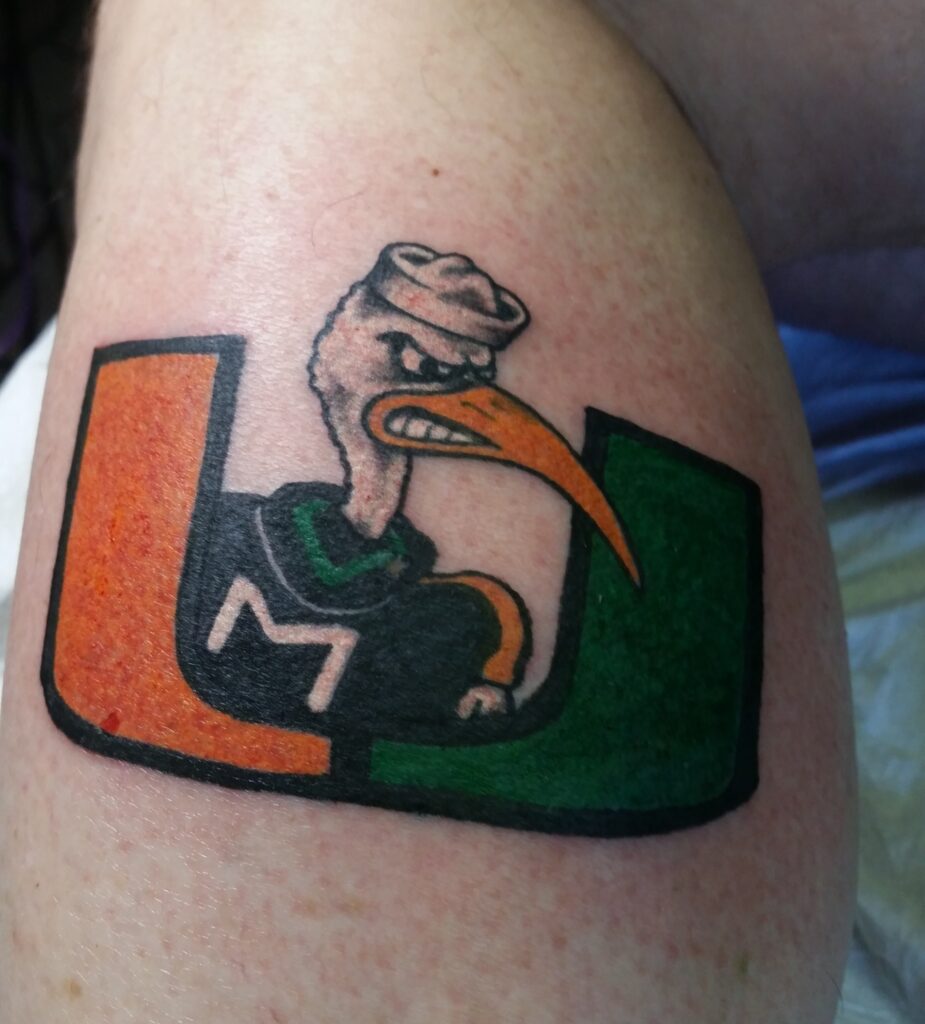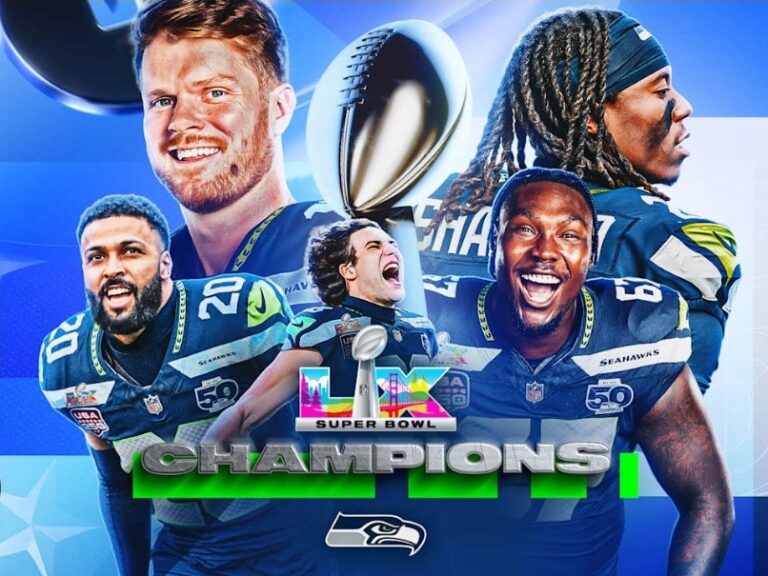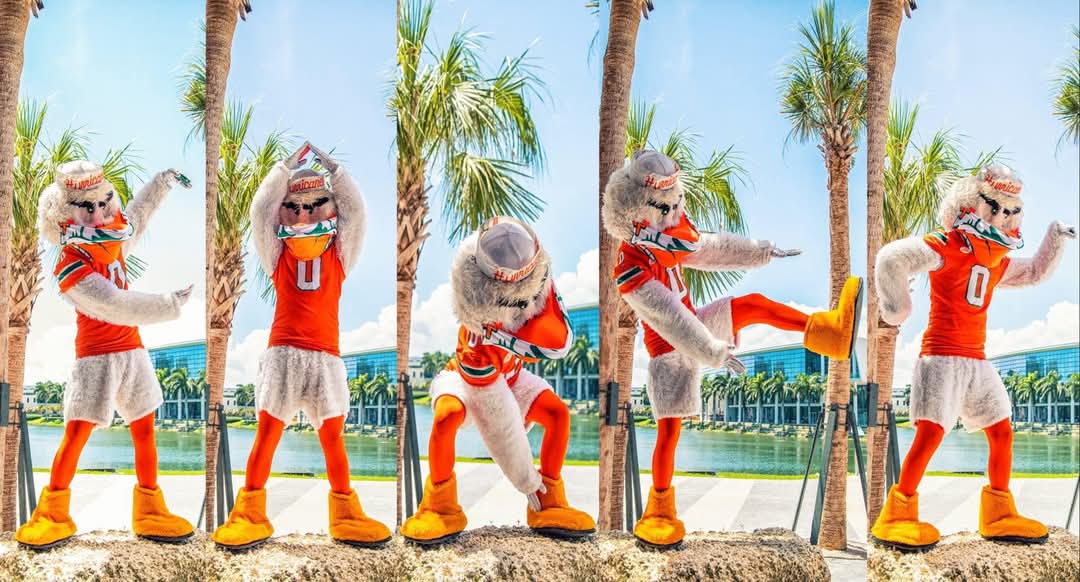

There are some social media posts that have been circulating that are not exactly accurate. For instance, one says that the University of Miami are in good company because two NFL teams won the Super Bowl – the Tampa Bay Buccaneers in 2020 and the Los Angeles Rams in 2021 – on their home fields…insinuating that now the Hurricanes should win because THEY are playing for a title game on THEIR home field. And another post said, “Some people wait a lifetime for a moment like this” as if to say this is a “once in a lifetime” event.
Both of those posts which have been liked and shared many times are not accurate.
Let’s start with the latter. The University of Miami football program has played in MANY games that would be for the NCAA National Championship. In fact, they played for a National Championship eight (8) times during a 12-year stretch from 1983 to 1994…winning in 1983, 1987, 1989, and 1991. Then after a 10-year drought, they won again in 2001.
The first statement is misleading because when they played for the National Championship in 1994, they lost to Nebraska IN THE ORANGE BOWL GAME…the Orange Bowl was, of course, the Hurricanes home field. Three of the Hurricanes five titles – 1983, 1987, 1991 – came IN the Orange Bowl while the other two – 1989 and 2001 – came elsewhere. They won it in the Sugar Bowl in 1989 and in the Rose Bowl in 2001.
So both posts, while exuding exuberance for the Hurricanes unlikely march to a title, are not at all accurate. The home field advantage is not new for the Hurricanes and has little to do with their success on the national stage. And this certainly is not a “once in a lifetime” event because it’s happened before…just a few times.
What really is the story is that the Hurricanes were almost not even included in the equation. Which is somewhat of the history of it all really. The University of Miami had an age of glory…well perhaps not “glory” but of success and the program was so popular that it didn’t need a marketing department. The wins, and the antics, were always front and center.
South Florida was always a hot bed for athletic and, especially football, talent and for a while the Orange Bowl was the stage every kid wanted to be on. Howard Schnellenberger, Jimmy Johnson, Dennis Erickson, Larry Coker…they all held that trophy high in the air.
The quarterbacks – Jim Kelly, Bernie Kosar, Vinny Testerverde, Steve Walsh, Craig Erickson…come on…you know the names.
The running backs – Frank Gore, Edgerrin James, Willis McGahee, Clinton Portis, Melvin Bratton
The receivers – Michael Irvin, Andre Johnson, Santana Moss, Jeremy Shockey
The defense – Jim Burt, Warren Sapp, Russell Maryland, Ray Lewis, Ed Reed
The names became as much a selling point as the palm trees and sunshine. But then, like a lot of other programs, other teams, they slid back into mediocrity. Whether it was the constant coaching changes, the constant philosophy changes, competition from other programs that were making moves to improve and drawing the top athletes away, the change in the NCAA itself which created a corporate dynamic and parity throughout. Every school has the same chance at top athletes because now the athletes (no longer really student athletes) are choosing to go where they are guaranteed playing time to showcase their wears for the NFL rather than for what the SCHOOL can offer them.
Regardless of the reason, the University of Miami football team lost its prowess along the way. And a lot of fans are saying that they are back from the dead. But these fans don’t even realize how dead they actually once were.
Because back in 1978, while Coach Lou Saban directed his two starting running backs – Kenny Johnson and Otis “OJ” Anderson – to walk around campus with footballs under their arms because they were fumbling too much, the Board of Trustees of the University of Miami was voting on disbanding the football program.
Then athletic director Harry Mallios, when I spoke with him about the huge deficit resulting from UM football, he recoiled and said to me, “Quite frankly, I would rather consider it the University’s commitment to athletics.” Somehow, some wealthy boosters swooped in and bought more time. But fans don’t know HOW close the University of Miami came to have NO FOOTBALL TEAM. So when you think about what was about to happen and what could have been, the resurrection goes back a little further than you might realize. So go ahead and raise those hurricane warning flags…a storm’s a brewin’.